A reporter and an editor sitting side by side at a table in the Toronto newsroom, both looking at the same laptop, with a TNAADO-branded microphone cube and an interview microphone on the table between them.

The Practice · Media

A working newsroom in Toronto.

Journalists, videographers and editors, a working newsroom with earned and broadcast distribution across Canada and into the US.

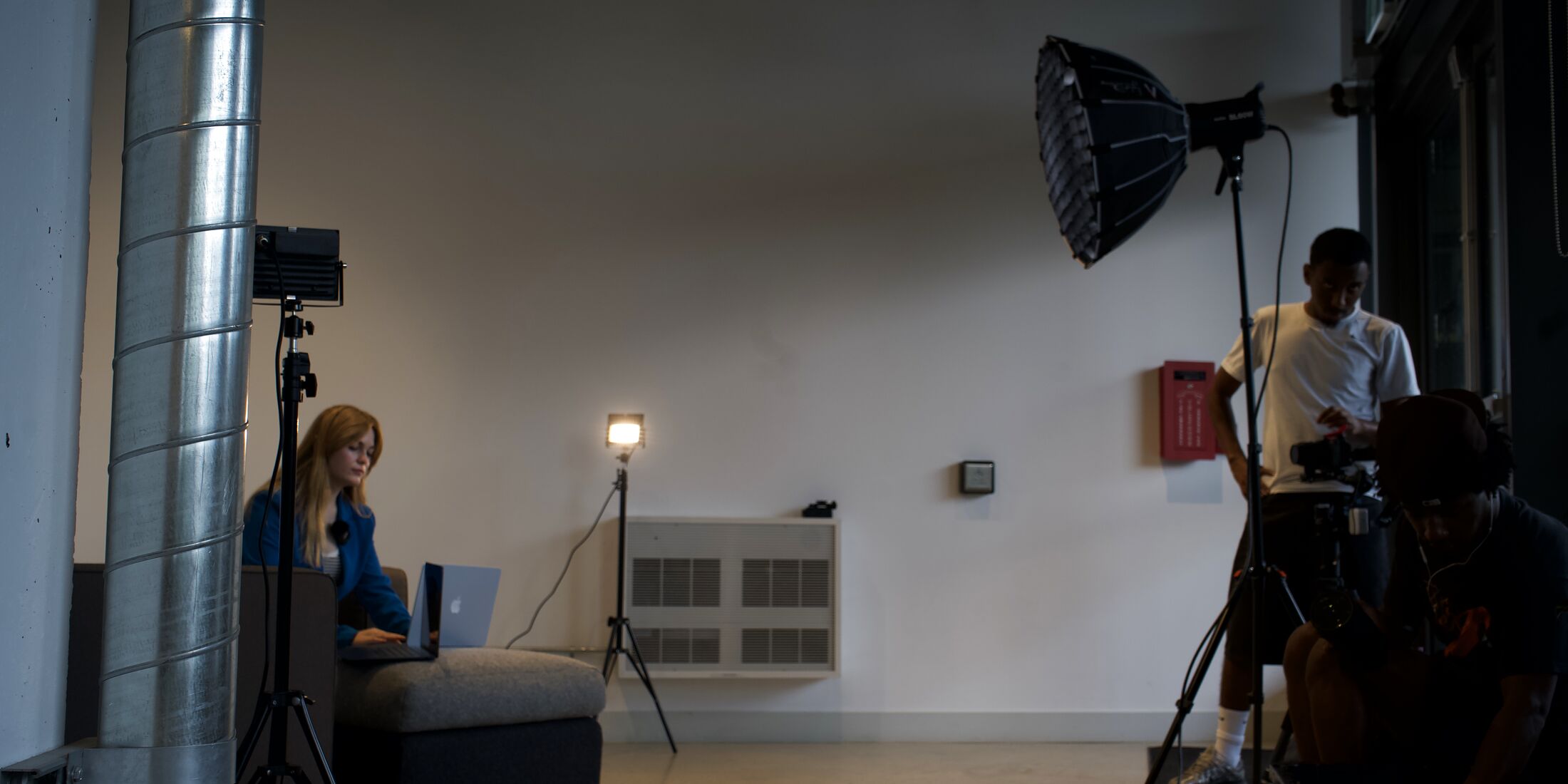
A lit interview set: a reporter working on a laptop at the left, LED panels on stands, and a camera operator and crew member under a large softbox at the right.

We run a working newsroom, and we built the systems it runs on.

Our own set, lit and rolling — reporter at the left, camera crew at the right.

Reporters, videographers and editors, publishing under our own masthead across Canada and into the United States. The production system the crew books through and the editorial CMS the newsroom files into were both written here.

Assignments start on the board.

Each morning the desk sets the day’s stories, a reporter takes one, and it goes out with a camera. The lineup in the photograph below is a real one, and four of the lines on it are now published pieces on The Dispatch.

Read The Dispatch

A producer coordinating on set during a shoot, crew and lighting behind her.
Coordinating the floor on a client shoot.
A reporter in a blue blazer stands at a whiteboard headed "Today's Stories", pointing at the last line of a seven-item list, with a colleague seated across the table.
Today’s Stories, on the board. Fife House, Team Cat Rescue, Ash Designs and Clever Clippings all ran.

Reporters, videographers, editors.

The practice is staffed the way a newsroom is staffed. Reporters carry beats and file copy. Videographers shoot the interview and the b-roll, and cut it. Editors hold the standard the piece has to clear before it publishes, and they are the only people who can release it.

The camera goes where the story is.

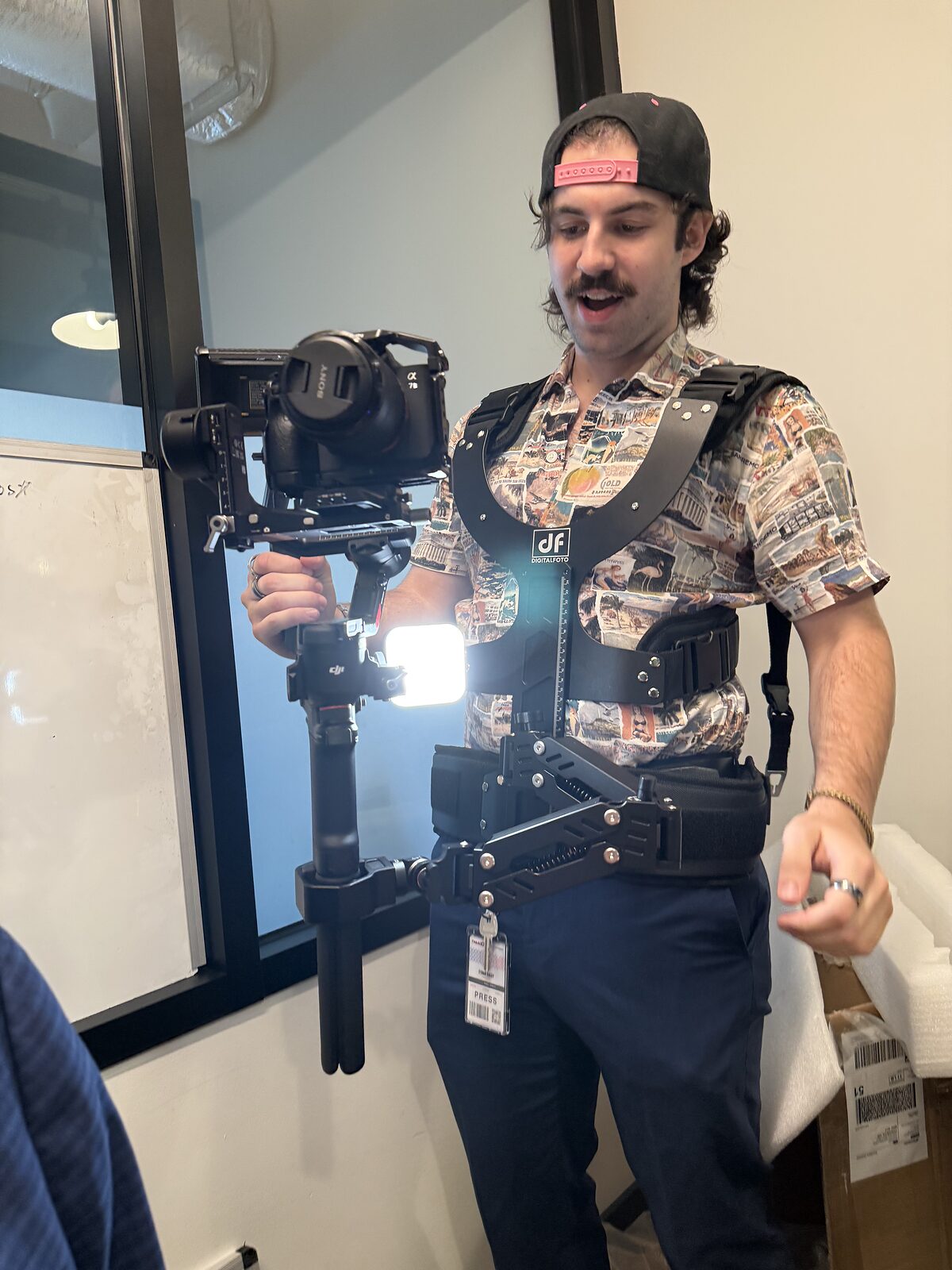
A body rig and a gimbal mean one operator can follow a subject through a corridor, a shop floor or a build site without a dolly and without a second pair of hands. Most of what runs on The Dispatch is shot that way.

A videographer wearing a body-support vest and spring arm, holding a gimbal with a mirrorless camera and a small LED panel, a PRESS badge at his belt.
Body rig and gimbal, working a narrow corridor.

How a piece gets captured.

An assignment leaves the board with a crew attached to it. The interview is lit and recorded in our own room or on the subject’s site, everyone on a lav, and the footage comes back the same day to be cut, written and filed for review.

  1. Assigned
  2. Lit & recorded
  3. Cut
  4. Written
  5. Filed for review
A TNAADO reporter in a blue blazer holding a branded microphone, interviewing a man against a brick wall with a painted mural, a second crew member at the edge of frame.
A reporter on the branded mic, interviewing on the subject’s site.

Then it goes back to the desk.

The cut and the copy come back together as one submission. Nothing reaches the public site because a reporter decided it was ready — an editor has to clear it, and the system enforces that rather than trusting it.

A reporter in a blue blazer with a RODE lavalier microphone clipped on, seated on camera with an open laptop beside her.
On camera, mic’d, with the piece open on the desk beside her.
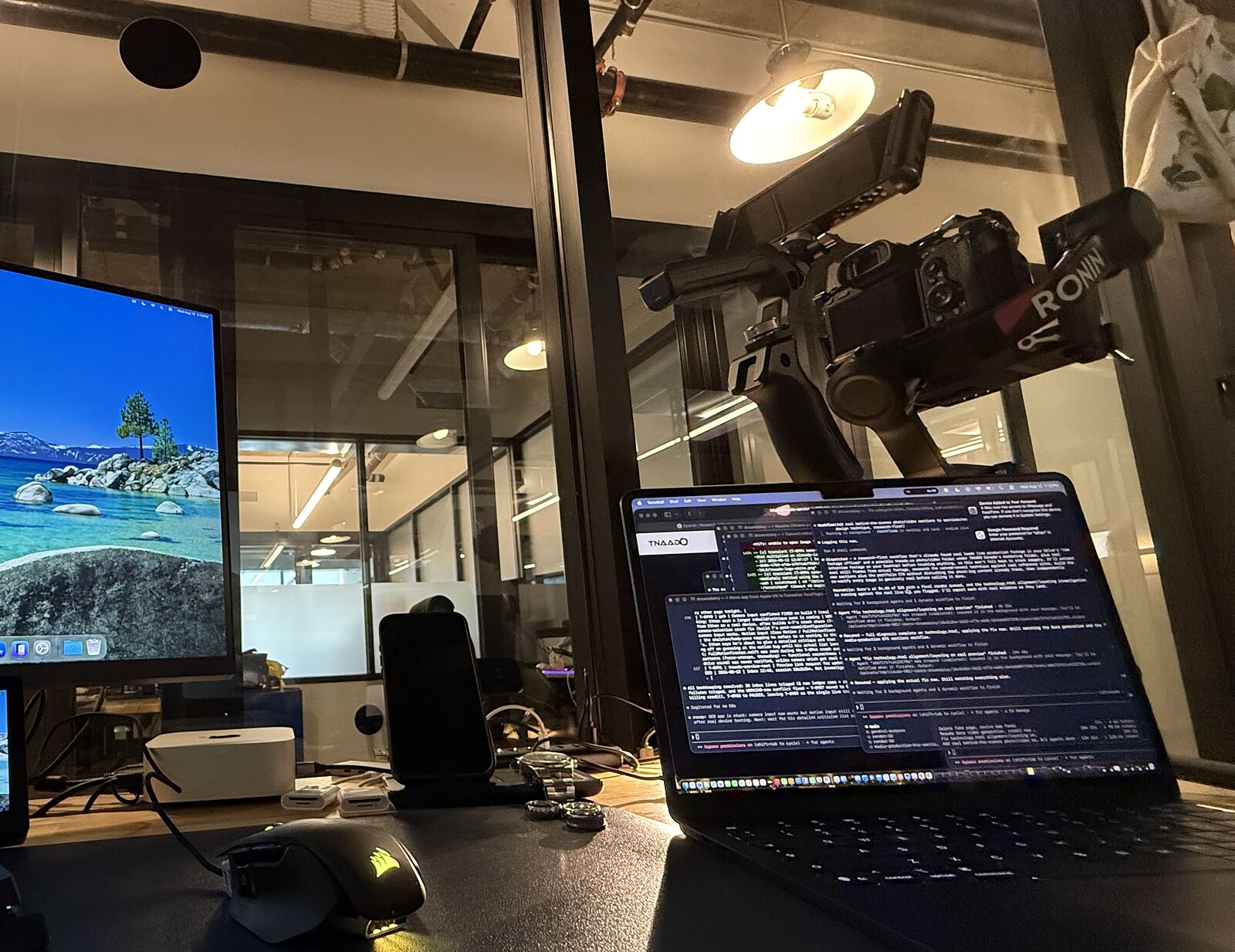
A desk in a Toronto office: dual displays and a backlit mechanical keyboard at the left, a laptop running a live coding session at the right, and a gimbal with a camera mounted suspended above it.
The gimbal and the build session, on the same desk. This is the whole idea.

We wrote the software our newsroom runs on.

Two systems carry the practice. One books and runs the shoot; the other takes what comes back and will not publish it until an editor has signed it off. Both are ours, both are in daily use, and both exist because we are a software firm as well as a media one.

Production

The Shoot

shoot.tnaado.ca

Every phase of a shoot in one place, from the booking to the crew getting paid.

  • Shoot planning & scheduling
  • Call sheets
  • Crew availability & assignment
  • On-site check-in & time tracking
  • Waivers & releases
  • Post-shoot review
  • Clients & CRM
  • Invoices, expenses & payroll

Editorial

The newsroom CMS

site.tnaado.ca

Where a piece is written, reviewed against the standard, and released — with the sign-off enforced in the database rather than by convention.

  • Article editor — content, media, SEO, schema
  • Draft → submitted → in review → approved → published
  • Editor sign-off required to publish
  • Compliance checklist before approval
  • Sources attached to the article
  • Append-only review history
  • Reader report inbox
  • Separate journalist, editor and admin roles

I Production · shoot.tnaado.ca

A shoot, from the booking to the crew getting paid.

The Shoot is ours, and the productions on the board are ours — The Dispatch, Dispatch Live, The Show. Four screens from it, in the order a shoot actually moves through them.

The Shoots board: tabs counting four upcoming, one in progress and three wrapped, above cards for productions carrying date, call time, location, crew count and task progress. A single production opened: a waterfront severe-weather standby marked in progress, with tabs for crew, tasks, shot list, equipment, time, reviews, contacts, financials and payments. The team directory: crew cards for a camera operator, a director of photography and an editor, each tagged with a department and a pay type, above filters for department, role and pay type. The admin screen: counters for active users, open incidents, pending pay and active shoots, above sections for user management, incident reports and app settings.

01 / 04 The Shoots board — every production across the team

02 / 04 One production, opened — overview, crew, gear, time and money

03 / 04 The crew directory — department, role and pay type per person

04 / 04 Admin — users, incidents and pay periods

II Editorial · site.tnaado.ca

An editor clears every story before it publishes.

The sign-off is enforced in the database rather than by convention. Three views of how a filed piece gets from the queue to approved — or doesn’t.

The editorial review queue: eight filed pieces listed with author desk and a status of submitted, in review, changes requested or approved. A compliance checklist on a single article, three of five complete: sources verified, media rights cleared and legal review ticked; accuracy and disclosures still open. The publish sign-off panel: a notice that the compliance checklist must be completed, a greyed-out approve button, and a request-changes box for pushing the piece back to the journalist.

01 / 03 The review queue — every filed piece, with the desk that filed it

02 / 03 One article opened — the compliance checklist, on the left of the screen

03 / 03 The same screen, right-hand panel — Approve, held shut

The spots for our own products are cut by the same crew.

TNAADO publishes a newsroom, ships apps and runs a free tools site, and the advertising for all of it is made in-house — the same reporters, the same cameras, the same edit. When we launch something, the campaign is shot by the people who built it.

An overhead view of a pale wood table: an iPad in a stand showing the live tnaado.ca homepage, a closed laptop, and a microphone with a foam windshield.
Our own front page, on the table it was made on.

Canada, and into the United States.

What the newsroom makes runs on our own masthead first and travels from there. Earned and broadcast placement across Canada is worked by journalists, editors and on-air talent who came out of Breakfast Television, CityNews and Beast Games, and US reach runs through our sister firm, TNAADO Labs, Inc. in Miami.

Owned

The Dispatch — daily Toronto business, technology and breaking news, published under our own masthead.

Broadcast

Segment and on-air placement, worked by people who have sat at the booking desk.

Cross-border

Into the United States through TNAADO Labs, Inc.

Hire the production team

A finished interview two-shot: two people either side of a laptop at a wood table, both wearing lavalier microphones, in a bright glass-walled office.
The two-shot that runs.

The Newsroom

Know a story we should be covering?

We cover business, technology and breaking news across Toronto, and we read everything that comes in.

Send us a tip
Listening…